


The smell hits first.
On the ground floor of an office tower in downtown Pretoria, I step out of the shopping mall concourse and into a small vestibule where a security guard sits behind a tall counter, paper register in front of him.
“Are you sure you’re meeting on the second floor?” he asks as I write my name. “You know they had a fire?”
I didn’t. I squint and nod anyway, more out of habit than certainty, and head for the stairs beside the elevators.
When Vuyo opens the glass door to the office reception, the air is thick and acrid. I try to cut the tension with a joke. “Are you having a barbecue?”
She lets out a quick involuntary laugh, like a frog leaping from her hands only to catch it again mid-air.
The reception furniture is pushed against the far wall, covered in a sheet of plastic. Down a long, dim hallway, the white paint slowly gives way to scorched black. Vuyo turns left and opens the door to what used to be the storage room.
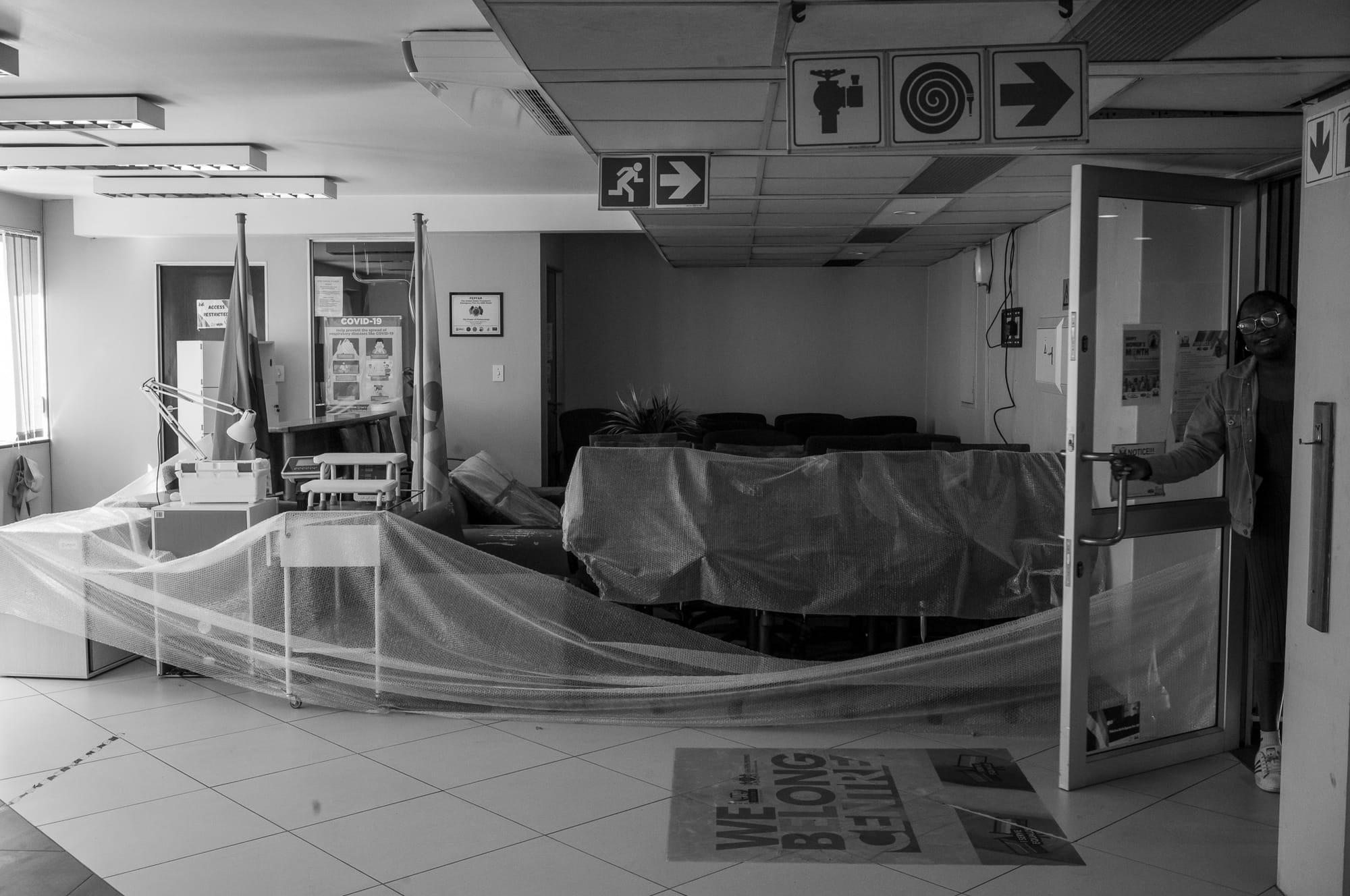
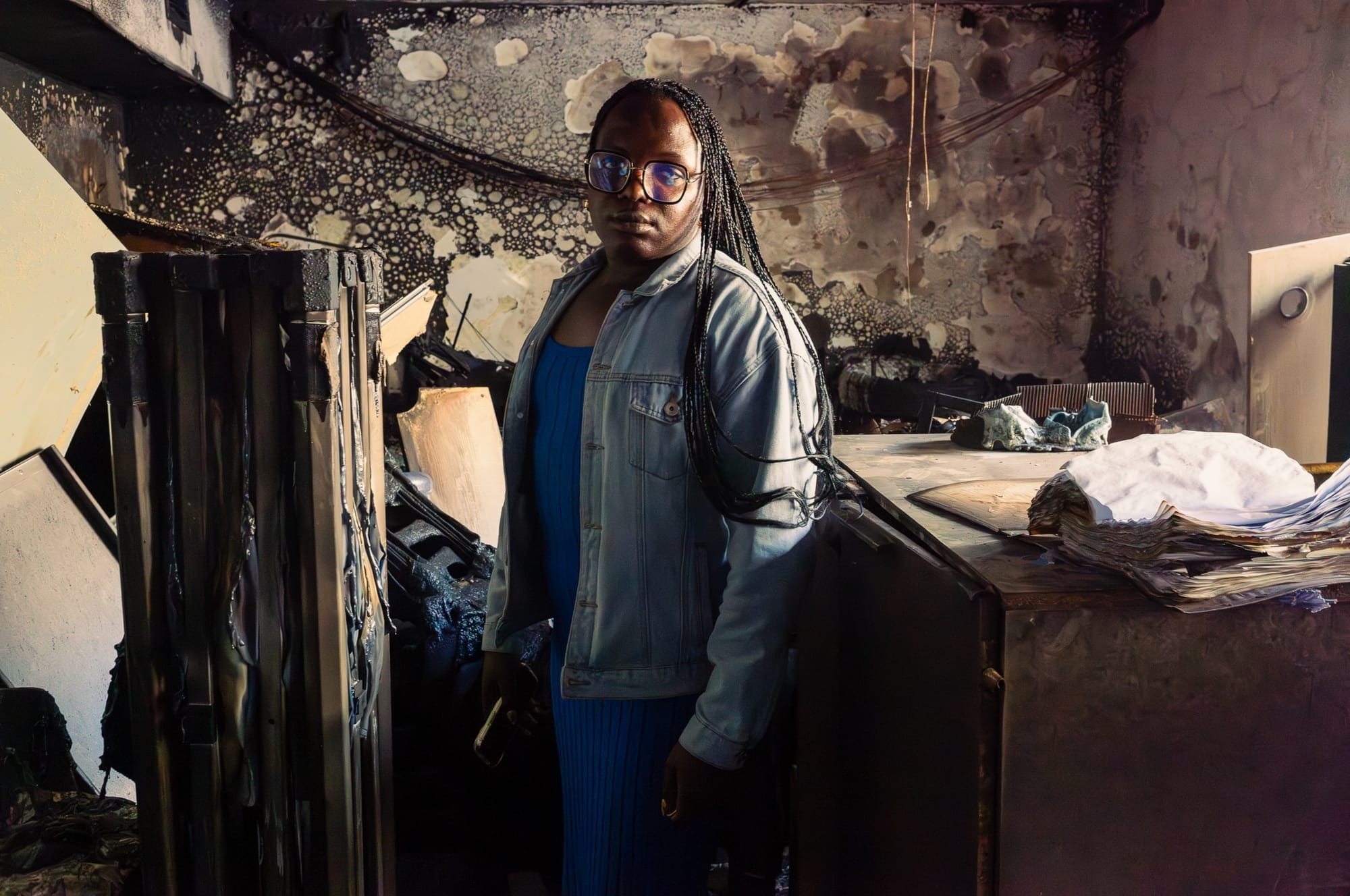
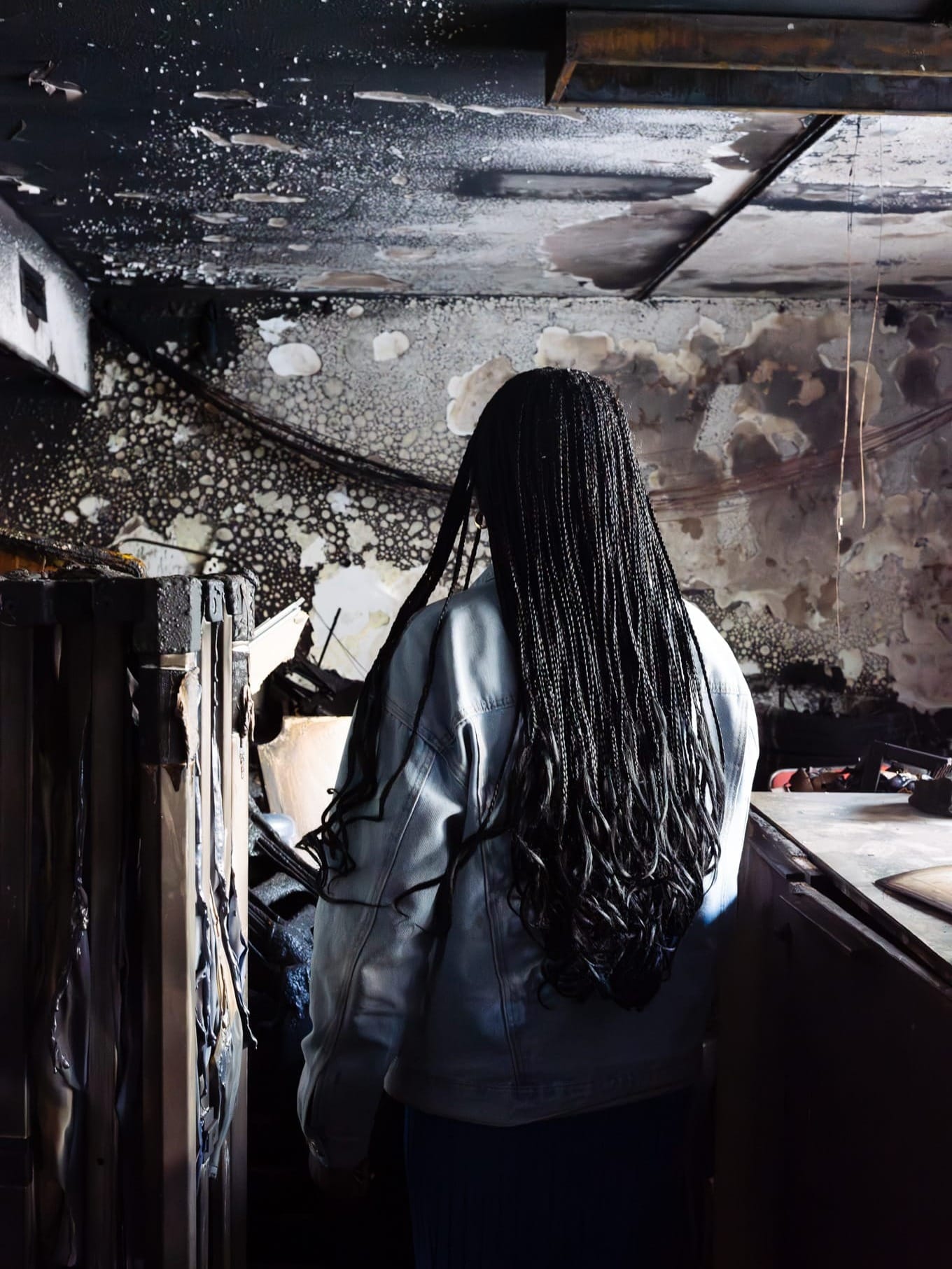
Melted plastic chairs cling together like bones fused by heat. Shelving has buckled and collapsed. A few outreach registers lie in ash, their pages curled and charred. The afternoon light pours through the windows, catching on the soot and dust.
“It was quite traumatic,” Vuyo says, running a finger along the edge of a blackened cabinet. Faulty wiring sparked the blaze while she and a few colleagues were still in the building. In minutes, the room that once held chairs, tents, medical registers, HIV testing kits, and banners was reduced to shades of black, memories of the colorful projects already long-ended.
I returned to Access Chapter 2 (AC2) for something quieter: to sit with former project staff and document what their work had meant, who they’d reached, and what had been lost when the funding stopped.
Looking across the room at the twisted, blackened remains, I remember how it felt when the U.S. government issued stop-work orders for most of its foreign aid in early 2025, including the HIV programs I’d worked on for years. Turning to Vuyo, I joke, “Too bad we can’t blame Elon Musk for this,” gesturing toward the ruined room.
We both laugh, then sigh. No one was hurt in the fire, and maybe that makes the lightness permissible.
But the truth sits heavier: the fire only exposed what had been smoldering for years: the fragility of project-based funding and the unending cycle of starting over for local organizations and their staff.
Rewind ⏪
I first met Vuyo a month earlier, when the air inside AC2’s offices was thick with determination instead of smoke.
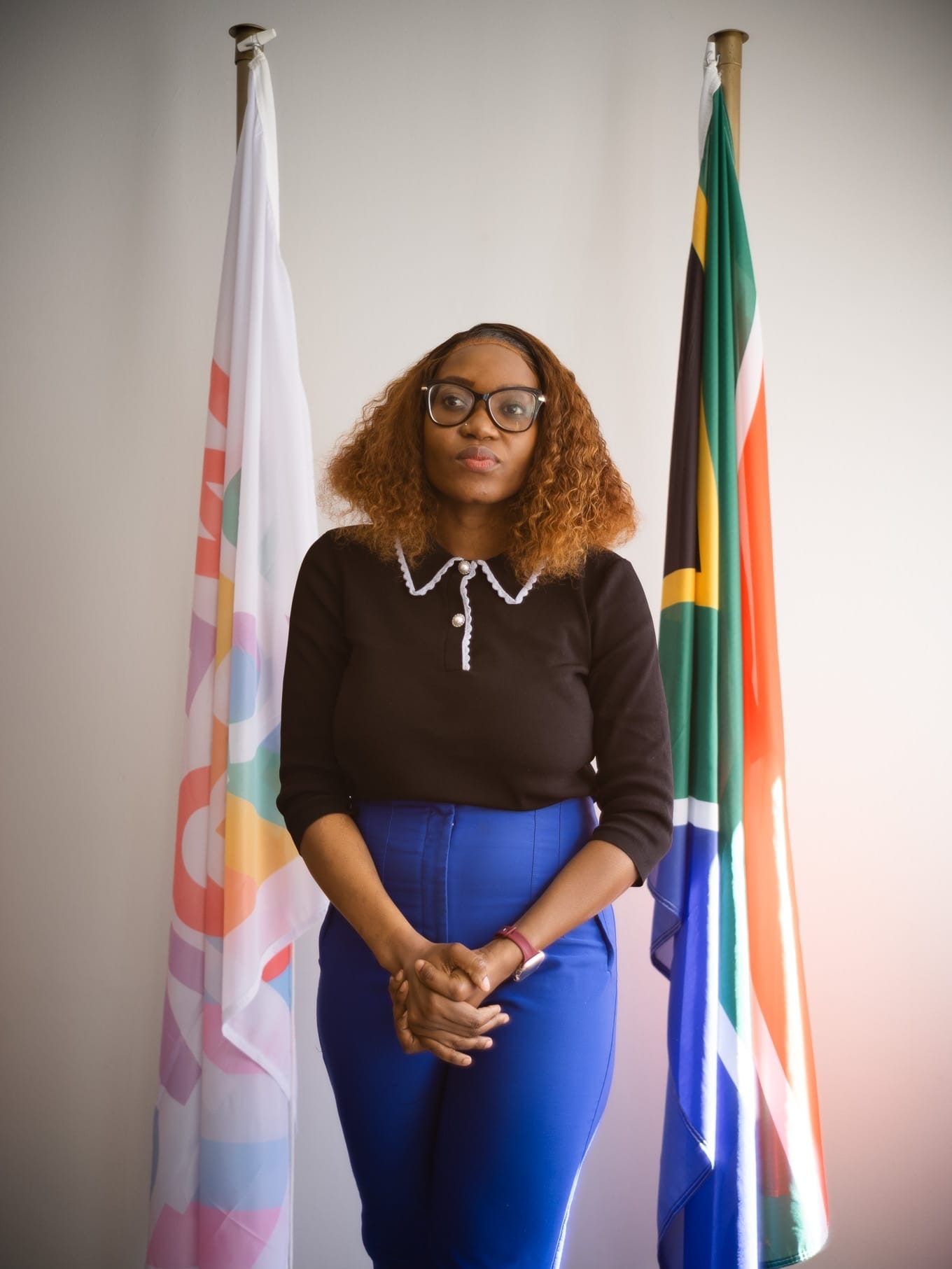
She introduced herself plainly: “Vuyo Mbutho, Access Chapter 2. Development and Advocacy Officer. Twenty-nine years old.”
Then she traced her path back to the University of the Free State, where she couldn't complete her degree.
“I lost my sponsor because of the discrimination I faced,” she told me. “They placed me in a female corridor, then forcibly moved me to a male one. As a trans woman, that was not a nice experience. I went through all sorts of attacks.”
Without a degree, the doors to formal employment kept closing.
“Now most organizations want to professionalize everything,” she said. “It’s become a problem for people with lived experience to occupy these spaces.”
Her break came when AC2’s former director went looking for people who did have that lived experience, people who understood what it meant to navigate clinics, stigma, and violence as queer and trans. Vuyo moved to the North West Province to help build a trans-led HIV program funded by the Global Fund.
“I started working here in 2021,” she said. “At our peak, there were about seventy people, including interns. Now we’re down to twelve. That’s because the Global Fund project ended and because of the U.S. funding cuts.”
Most people don’t even know what a ‘funding cut’ is. They just know they need services.
In South Africa, those cuts are not an abstraction. Since January 2025, an estimated $261 million in U.S. funding has been withdrawn from nonprofit HIV programs, leading to the termination of 15,374 HIV response staff positions and service disruptions affecting approximately 222,000 people living with HIV, including 7,445 children under the age of 15. A government-commissioned modeling study warns that if these gaps are not filled, South Africa could see 150,000 to 296,000 additional HIV infections and 56,000 to 65,000 additional HIV-related deaths by the end of 2028.
Even though the U.S. stop-work order didn’t hit AC2’s main grants directly, it sent out shock waves, with delayed sub-awards, frozen partnerships, and donors growing increasingly cautious.
When her earlier contract ended, Vuyo spent more than a year at home.
“I was applying for other opportunities,” she said. “I even went to the U.S. through the Mandela Washington Fellowship. But when I came back, they called me. They said they needed people who could think strategically and execute.”
She returned to AC2 in July 2024 to lead development and advocacy, just a month before my first visit. She spoke about carrying too much and earning too little, of keeping a team together on faith alone.
“I’m fortunate to be paid,” she said quietly, “but most people here aren’t. They’re volunteering… mostly because they love the work and believe in it.”
Later that day, I met AC2’s newly appointed Executive Director, Keneilwe Zulu, who carried a similar mix of resolve and exhaustion.
“We need proper management so we don’t close clinics and offices every time two or three grants end,” she said. “Communities shouldn’t feel the effects of funding cuts. Most people don’t even know what a ‘funding cut’ is. They just know they need services.”
She looked around the office, as if measuring what could be sustained with what little remained.
“Sometimes we need to go smaller to go bigger,” she added.
Fast-forward ⏩
Four weeks later, AC2 has indeed gone smaller.
The fire has ripped through the storage room, and the organization feels stripped down to its bones. Clinical equipment, outreach tents, leftover HIV commodities. All gone.
“Last time you visited, we had twelve staff,” Vuyo says softly, pulling me back from my thoughts. “Now we’re only eight.”
We’re here to do what we planned before the fire: bring in five former colleagues from past projects, record their stories, and re-create some of their work through photos. Part nostalgia and part documentation, but mostly an excuse to slow down and be present with the human feeling of moving on from work that once gave their days meaning.
For some, Vuyo has had to send transport money.
“They’re coming,” she says, glancing at her phone. “The taxis don’t move until they’re full.”
In South Africa, “taxi” doesn’t mean a lone cab. It usually means a shared minibus, packed with 15–20 passengers, running fixed routes and only leaving once every seat is taken. Getting to a meeting can be an exercise in patience and faith.
They arrive in twos and threes:
- Lesego, a former senior mentor
- Hectar and Abongile, former life mentors
- Neo, a 28-year-old human rights litigator
- Lebohang, a linkage officer
Hectar is one of the first to arrive; his name is embroidered neatly on his polo shirt, making it easy to remember. He pauses in the dark hallway, then steps into the burnt-out storage room and stops dead, mouth open.
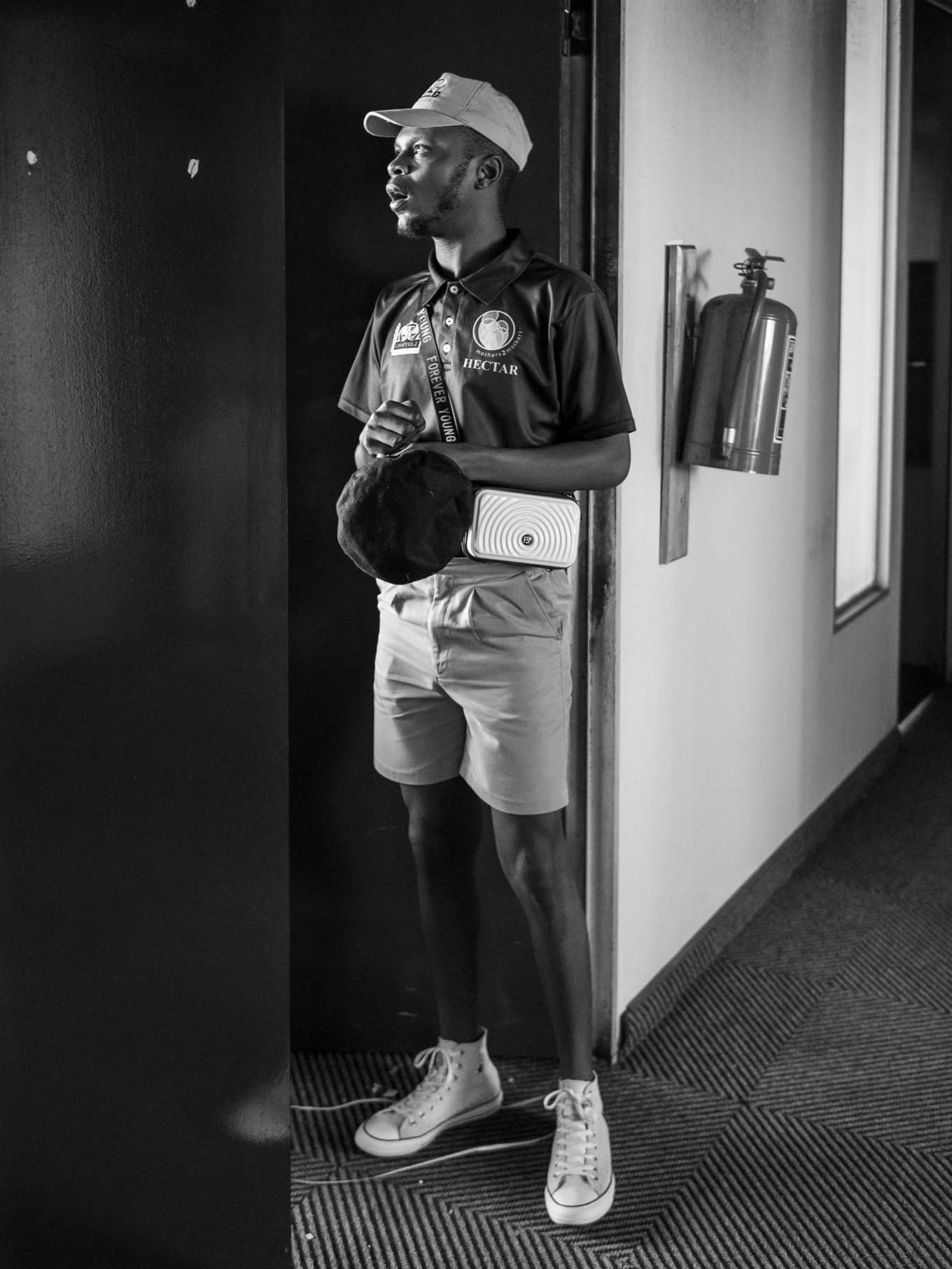
I follow him inside and raise my camera, not to sensationalize the damage, but to hold on to the rawness of his reaction. This is where he once picked up tents and testing kits before heading into communities. Now it’s a graveyard of melted plastic and ash.
As the others arrive, they each take a moment in the doorway, eyes scanning the wreckage, before we head upstairs to a small room on the third floor for a group discussion.
Up there, away from the smell of smoke, they talk about how the fire and the funding gaps are two sides of the same story: always starting over.
One of them breaks the tension with a phrase that lands like a diagnosis.
“Being queer in South Africa without money,” she says, “it’s another pandemic on its own.”
Everyone nods at once, a mix of laughter and recognition, like an inside joke that isn’t really a joke at all.
Before, we could call 200 transgender people to one venue in the community. Now I don’t think we could do that.
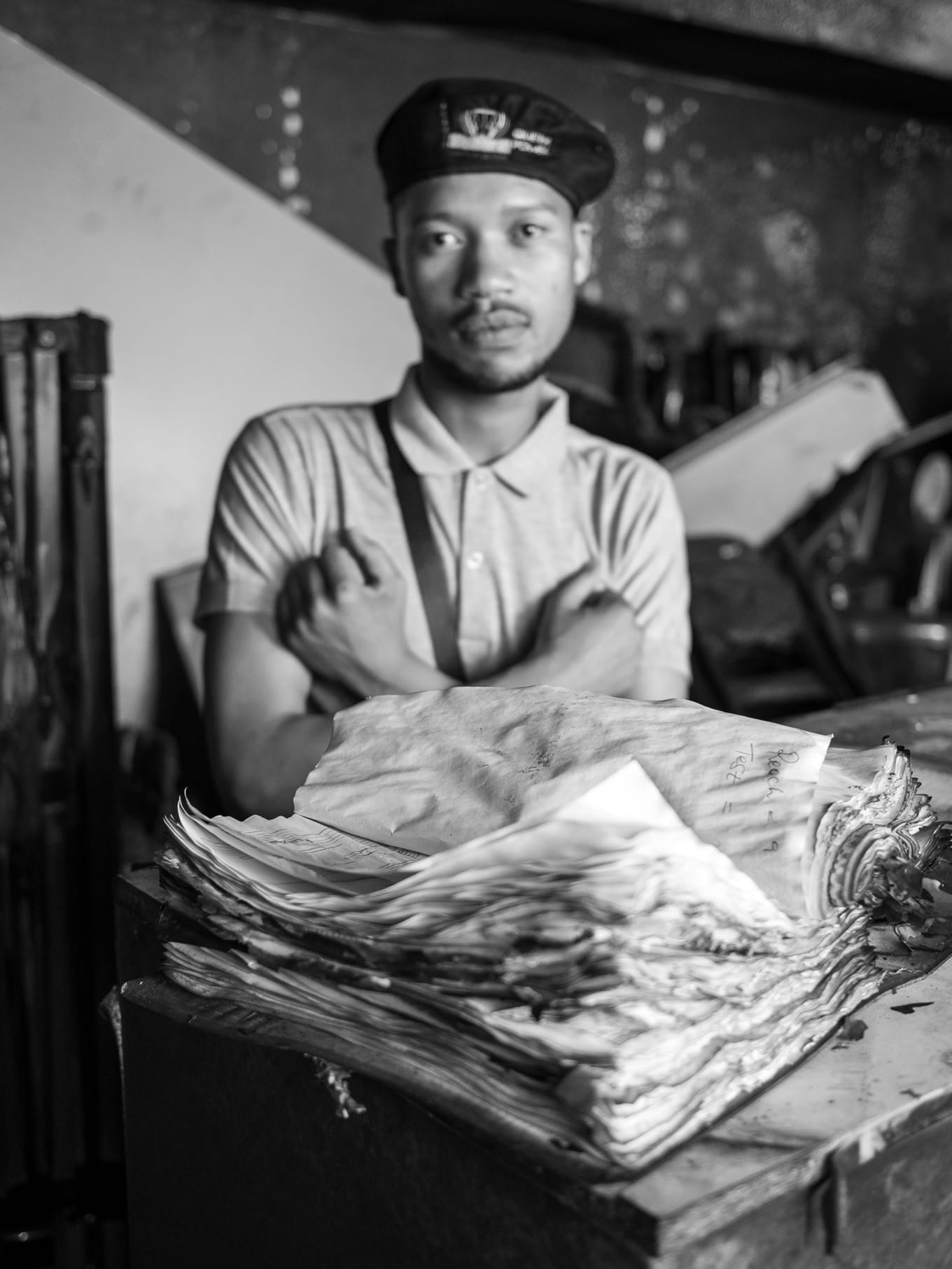
One by one, they speak about the work they used to do and what disappeared when the grants ended.
Most of the group had worked on a peer-support pilot with Mothers2Mothers, funded by the Gates Foundation. Only Lebohang and Vuyo had also worked on the trans-led HIV program in the North West. Both projects centered key populations, especially men who have sex with men and transgender people, those most likely to slip through the cracks of mainstream services.
“We created safe spaces for people living with HIV and their families,” Lesego says of the Mothers2Mothers pilot. “We focused on men who have sex with men and transgender people.”
When the pilot ended, the program didn’t taper; it stopped.
“It created a loophole for many of our beneficiaries,” Lesego explains. “People started defaulting on their medication.”
“Before, we could call 200 transgender people to one venue in the community,” Vuyo adds. “Now I don’t think we could do that.”
Lesego shifts to the work that continued inside the We Belong centers. “We had safe spaces,” he says. “Whatever was new, a new pill or side effects, we could share it there.”
Hectar, who once managed adherence sessions and health talks, shakes his head. “Now I can’t refer anyone,” he says. “There’s nothing I can do.”
Neo, a human rights litigator who supported disclosure and legal navigation, describes the quieter work behind the numbers. “We got referrals to help clients who test positive and don’t know how to disclose to loved ones,” he says. “Or gay and trans clients who don’t know how to disclose their sexuality or gender. We teach treatment literacy, adherence, safety, and human rights.”
They describe what it means to help someone say, “I’m HIV-positive,” or “I’m gay,” out loud for the first time in their own home. Those conversations build fragile but crucial networks. No more hiding pills at the back of a wardrobe or inventing excuses to visit the clinic. It’s easier to ask for transport money to go pick up your ARVs when your parents know you’re living with HIV and understand why treatment matters.
Across South Africa, organizations like AC2 are trying to hold these networks together with less and less. A recent survey of community-based organizations in South Africa found that over a third have less than two months of funding left, almost a quarter have already lost more than half of their funding, and about a quarter have had to lay off staff—sometimes up to 75% of their workforce. Behind each percentage point are people like the ones sitting around this table: mentors, peer educators, linkage officers, and advocates suddenly told there is “no budget” for the work they still feel responsible for.
As we leave the office, those roles slip back on like familiar jackets. The group falls into an easy rhythm, teasing and joking. In the hallway, Abongile prances toward the elevator, laughter echoing against the scorched walls.
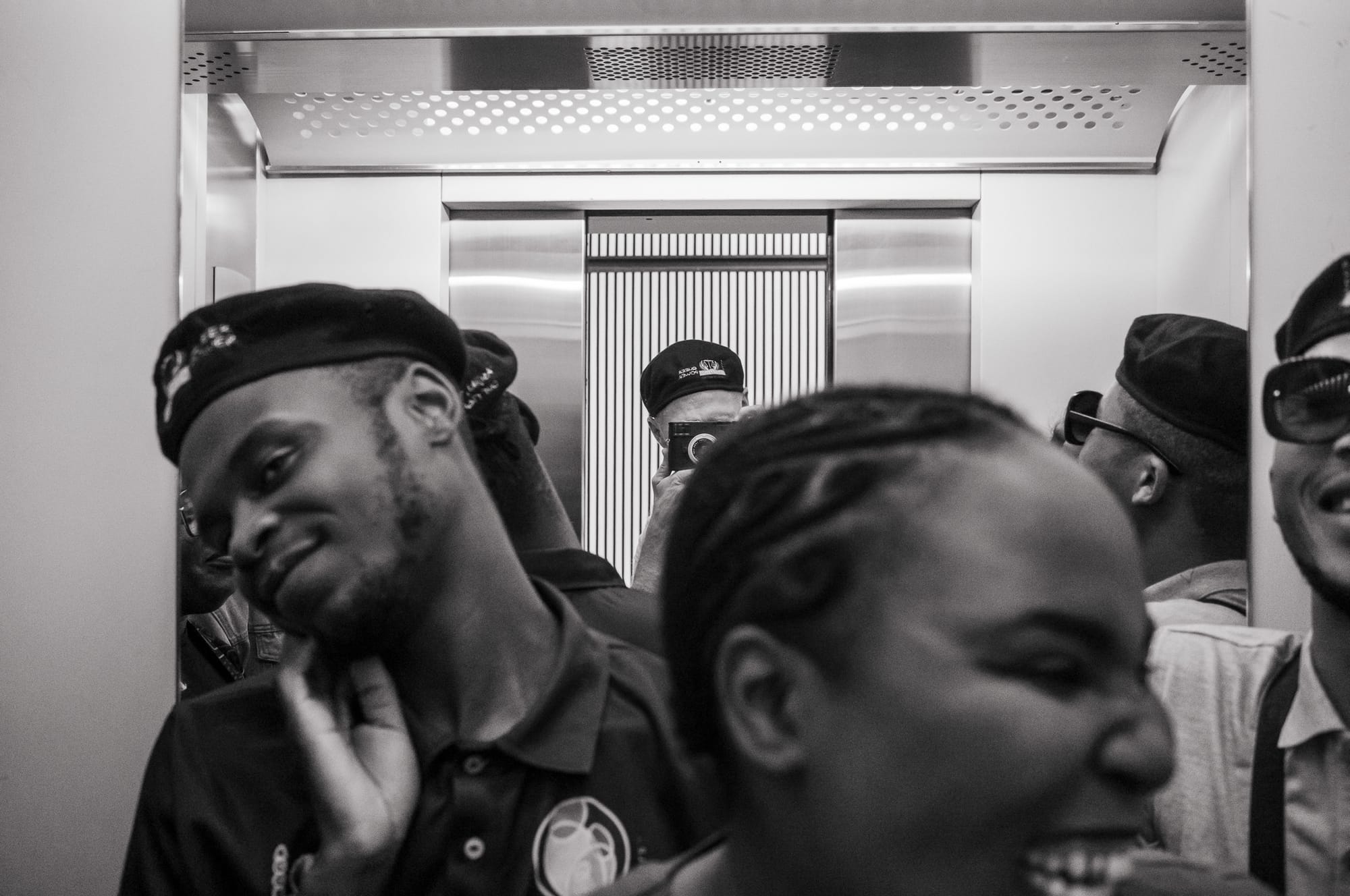
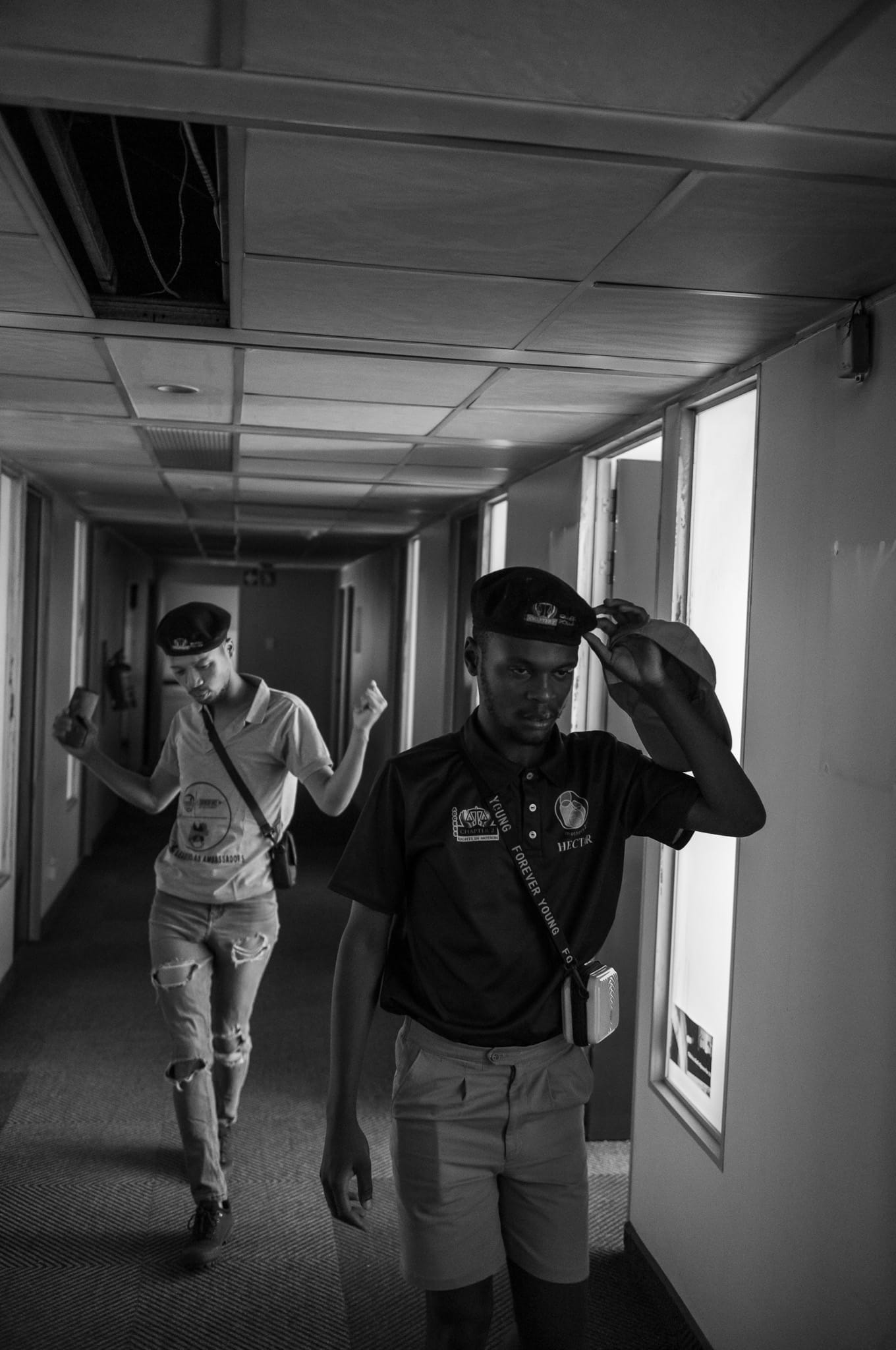
Departing the AC2 office in Pretoria, South Africa. Photos by Ben Eveslage on 11 September 2025.
Muscle Memory
First, we stop in a neighboring parking lot where two of AC2’s mobile clinics sit covered in dust and leaves.
Neo steps between the vans and strikes a powerful pose, chin lifted, as if the clinic could roll out at any moment.
Hectar pretends to open one of the doors, launching into his old routine: HIV testing, counseling, the practiced ease of explaining viral load in plain language.
Abongile stands framed in the window of the van, looking out as if scanning for the next client.
Wearing their old project polos, scrubs, and berets, something shifts. You can feel the muscle memory of outreach; how quickly they slip back into their roles once they’re near the tools that made their work possible.
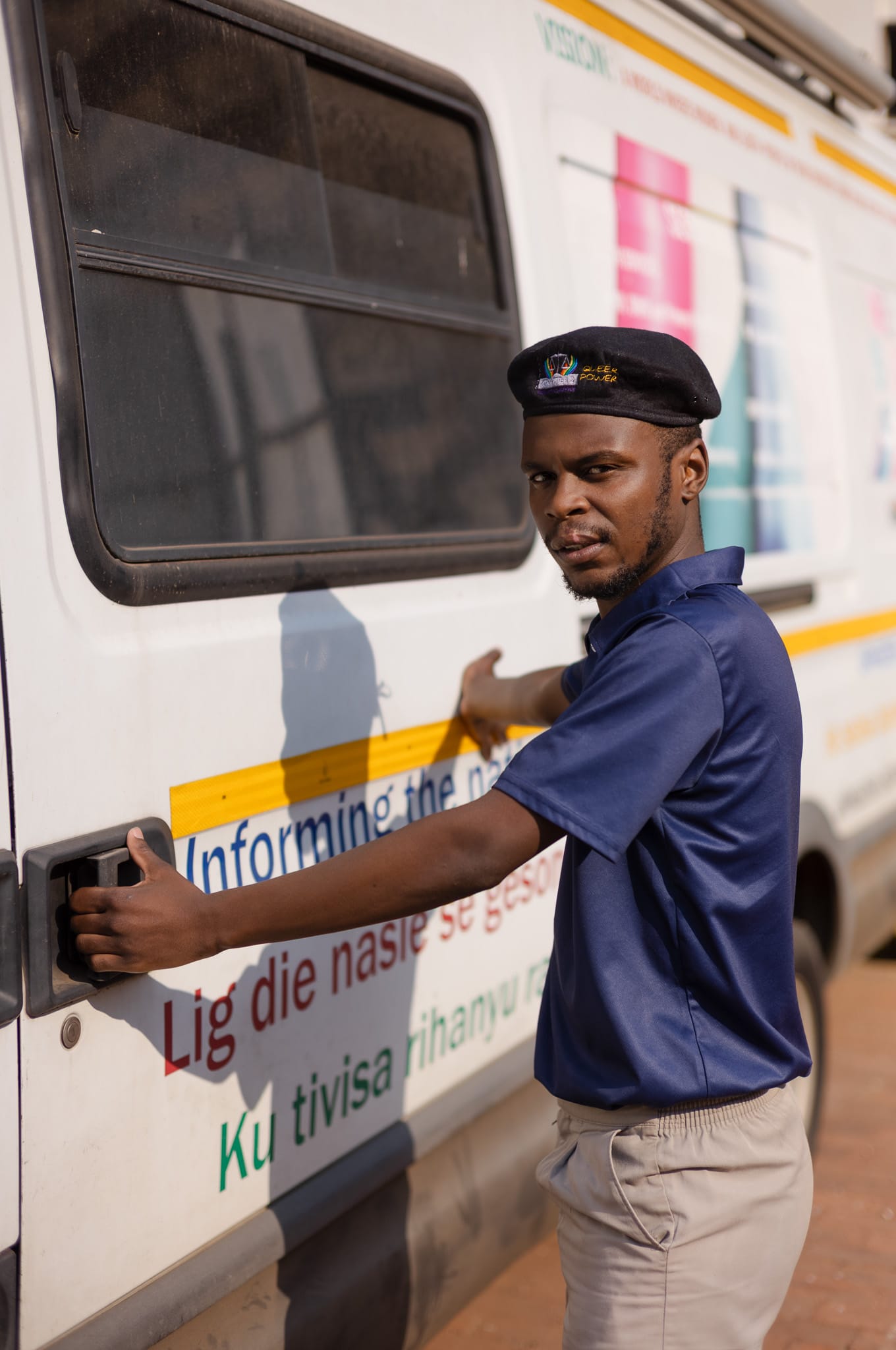
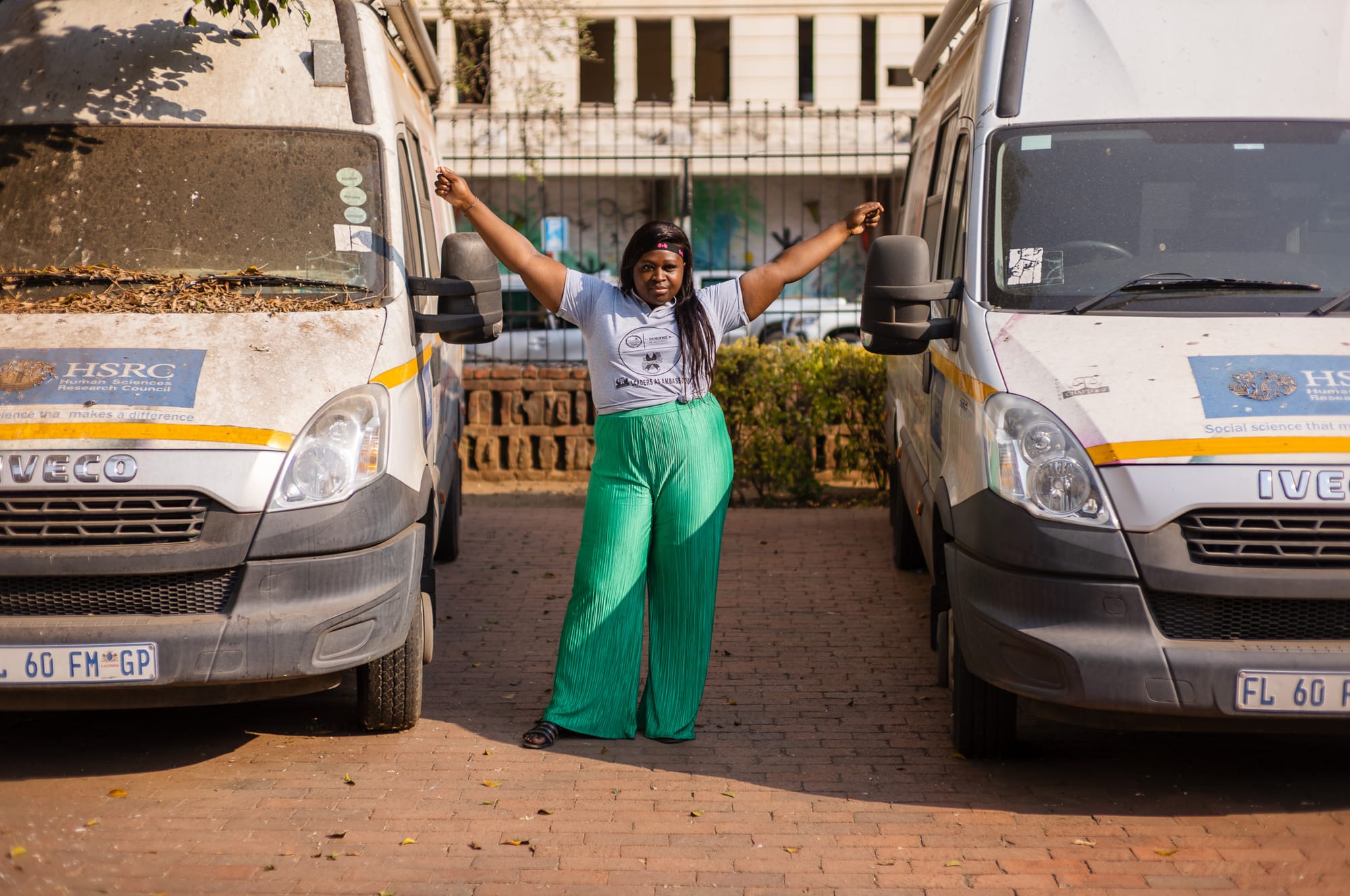
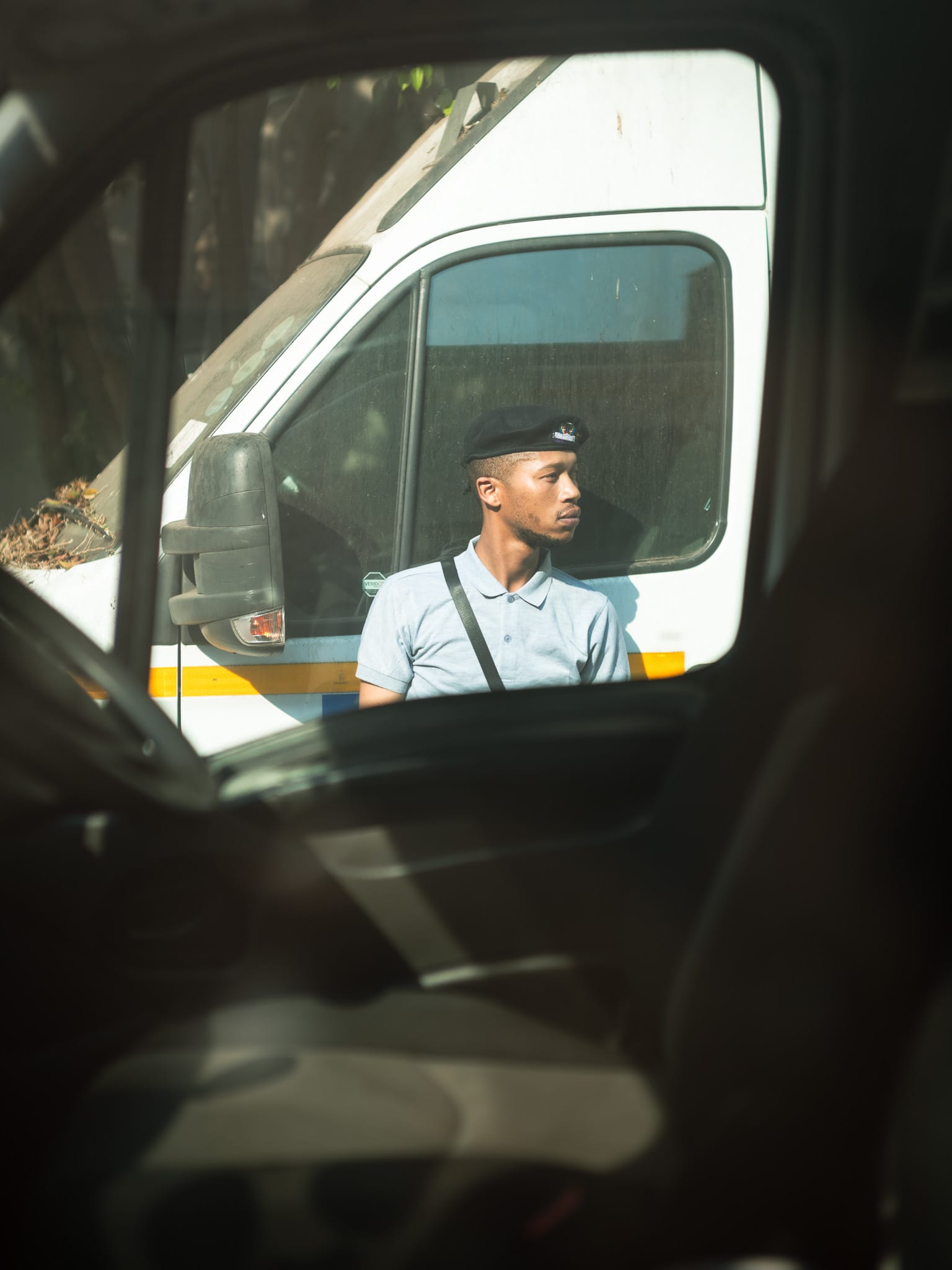
AC2's mobile clinics sit collecting dust with Hectar (left), Neo (center), and Abongile (right). Photos by Ben Eveslage on 11 September 2025.
We walk through downtown Pretoria, pausing in Church Square, where they once ran HIV awareness campaigns. The sun is soft; the square hums with traffic and conversation. For a moment, it’s easy to picture them back “on duty,” calling out to passersby, handing out flyers and condoms, turning a public square into a safer space.
As the afternoon winds down, Vuyo takes out her purse and counts out small notes for transport. One by one, they head back to taxis that may or may not leave on time.
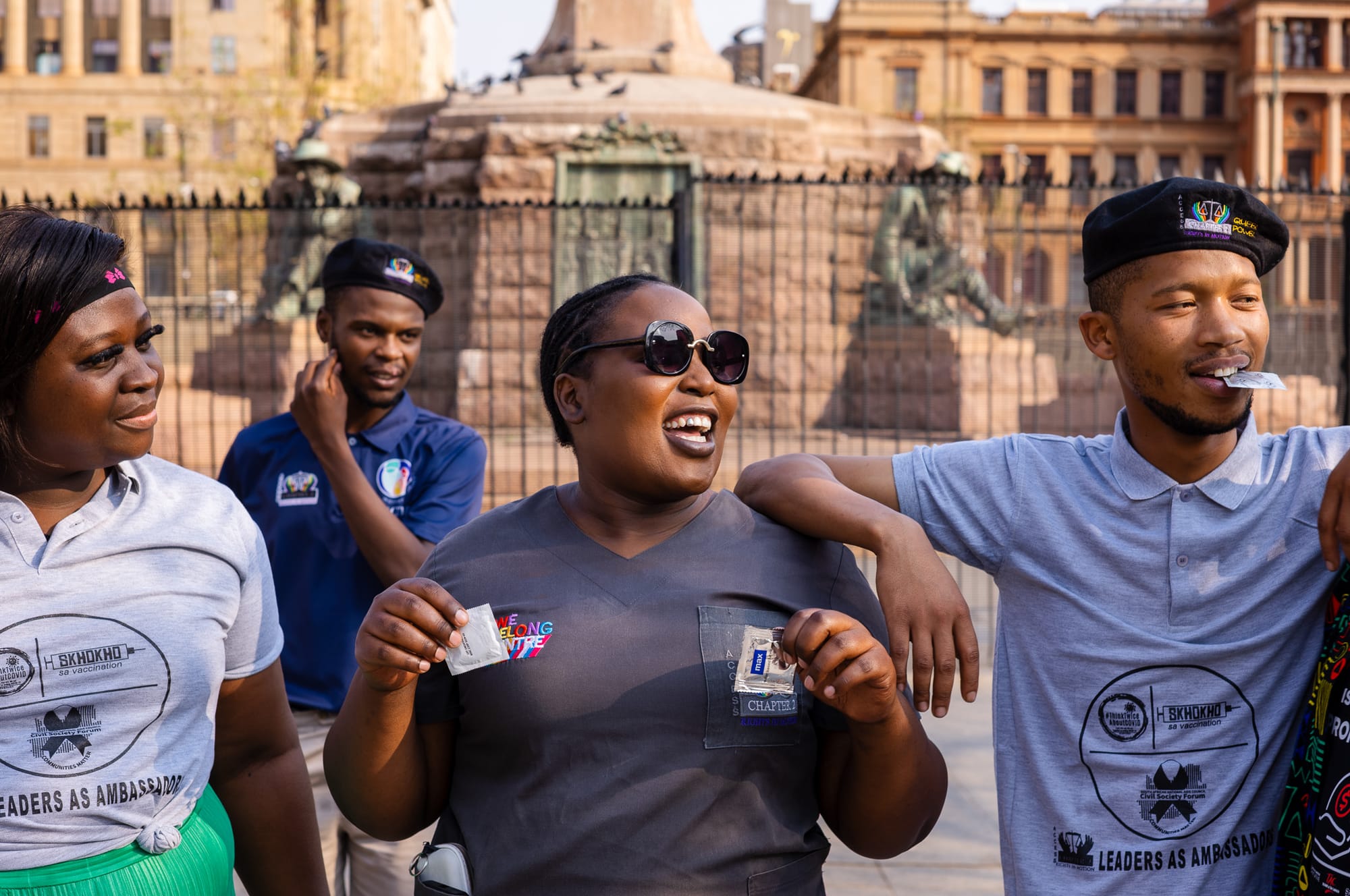
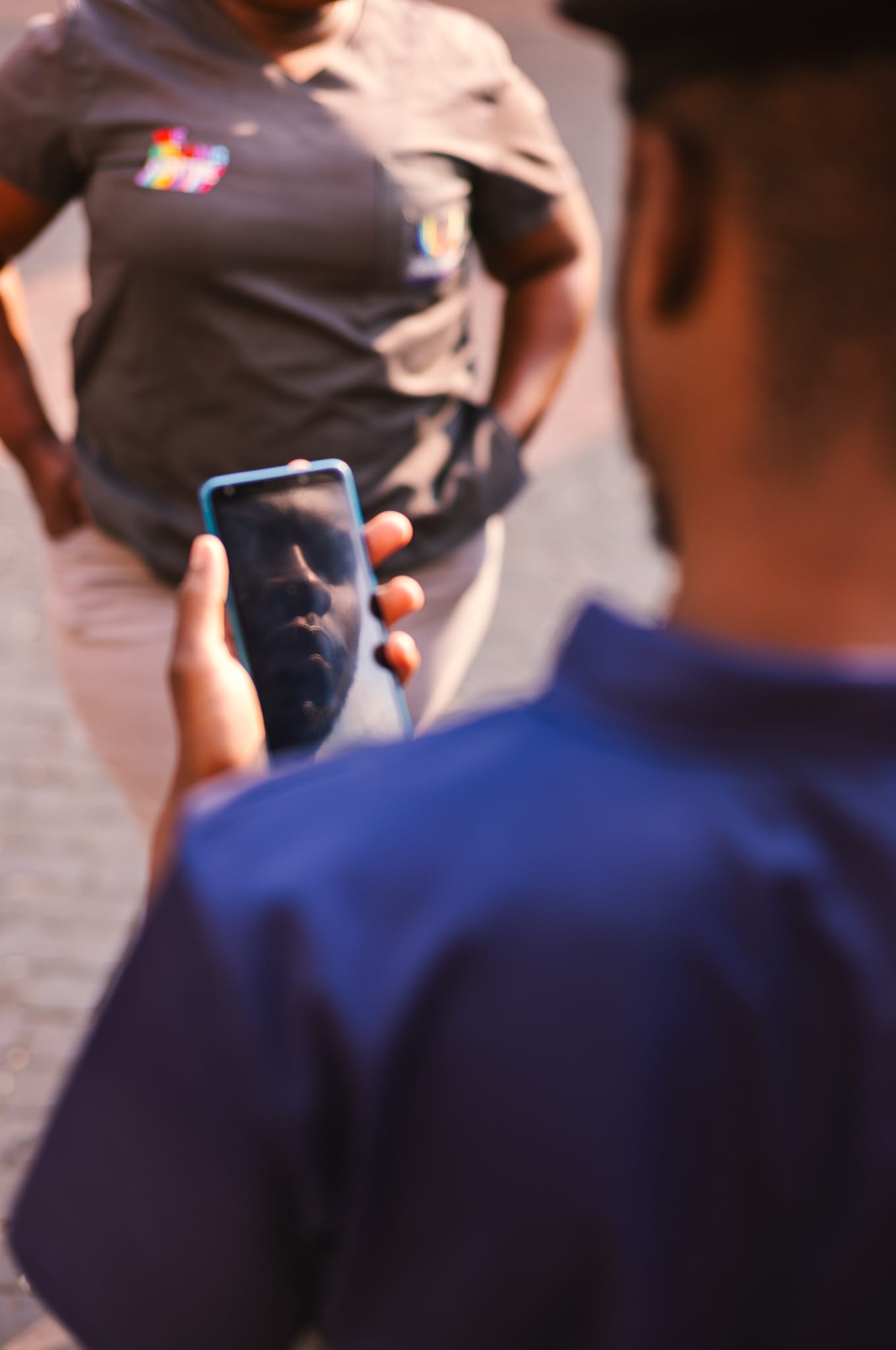
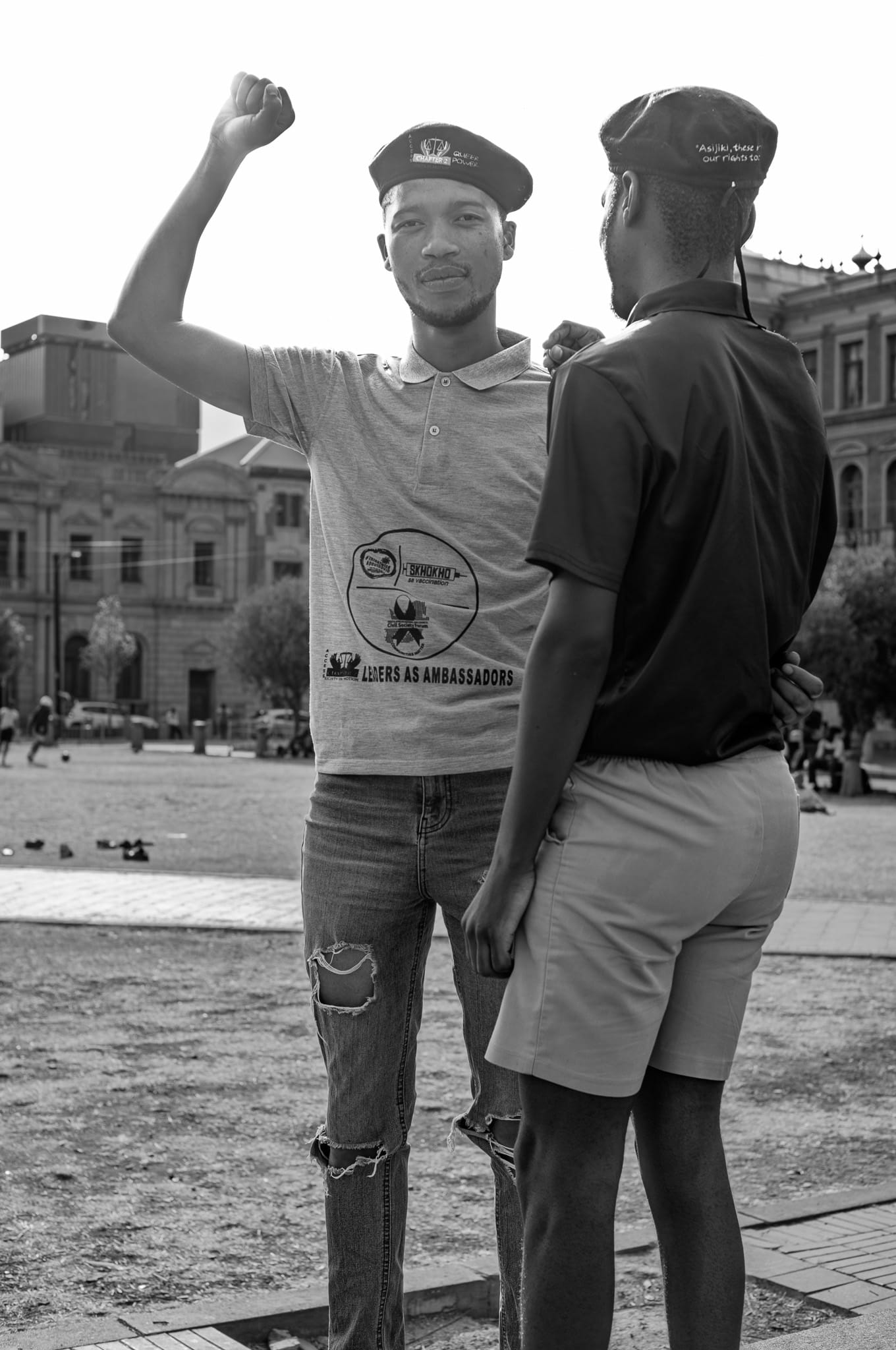
Former Access Chapter 2 staff visit Church Square where they had conducted HIV outreach sessions for past projects. Photos by Ben Eveslage on 11 September 2025.
Hectar stays behind, riding with me to the Johannesburg bus terminal—a quiet, unexpected forty-minute stretch.
I ask him about what was said earlier: “Being queer or trans in South Africa without money… it’s another pandemic on its own.”
He nods, eyes on the traffic.
He explains how people in the community look up to them, the outreach workers, the peer educators, expecting them to be anchors. To dress well. To have answers. To be unshakable.
“It’s sad to be home with nothing to do and little to eat,” he says. “My mom, she doesn’t have a job. She collects things on the street to recycle.”
His words linger long after I drop him off. The terminal is loud and crowded, but his honesty stays with me, a reminder of how heavy “visibility” can be when the world expects you to lead while you’re barely surviving yourself.
Pausing to Reflect ⏸️
The fire at Access Chapter 2 was an accident, caused by faulty wiring. But it felt like a symbol, too. By the time the walls went black, months of disconnection, underfunding, and uncertainty had already been eating away at the organization’s core. Like many LGBTQ+ and key population–led NGOs across Africa, AC2 lives inside a cycle of short-term projects, promises that end in closures, layoffs, and another round of starting over.
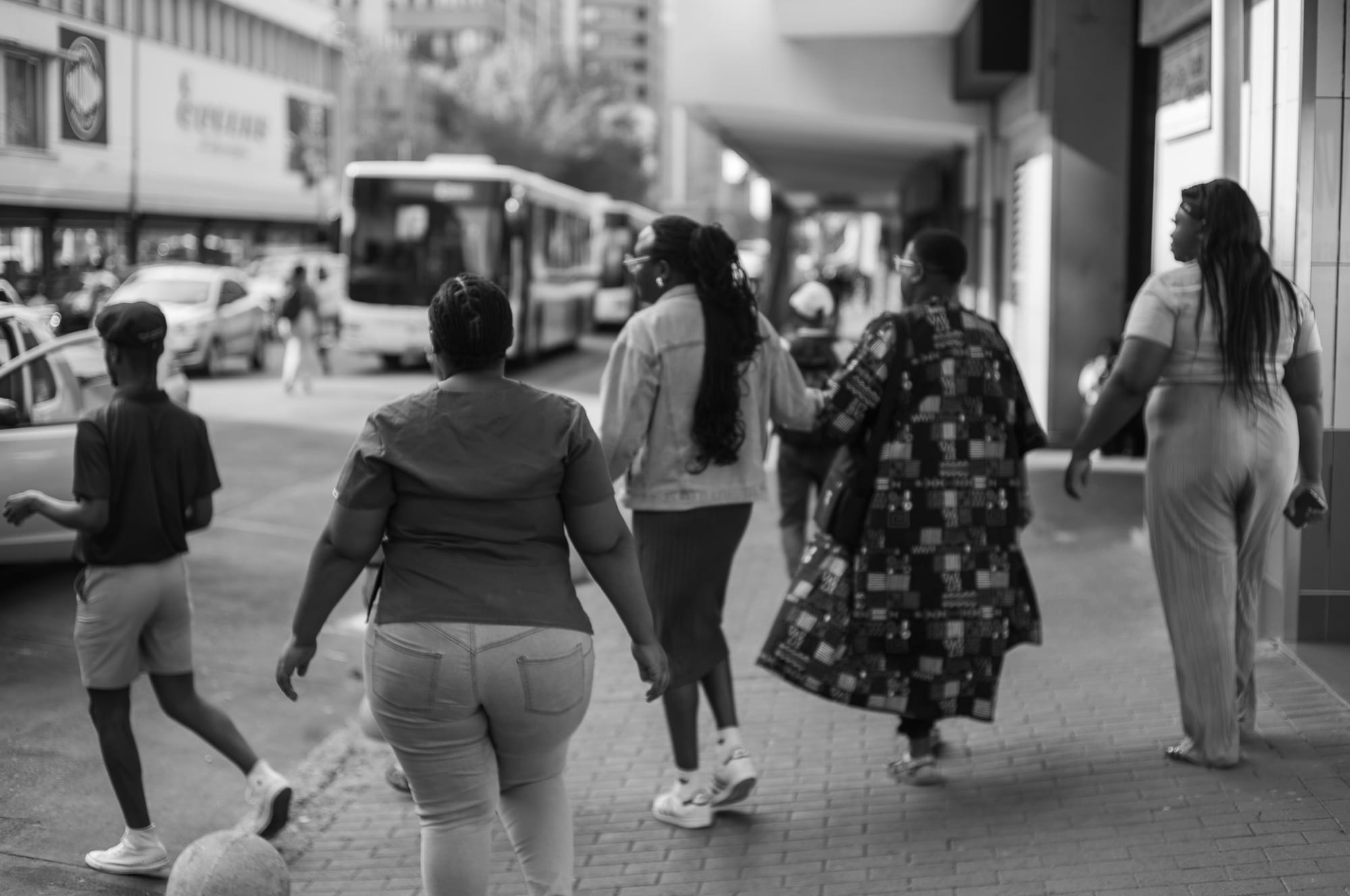
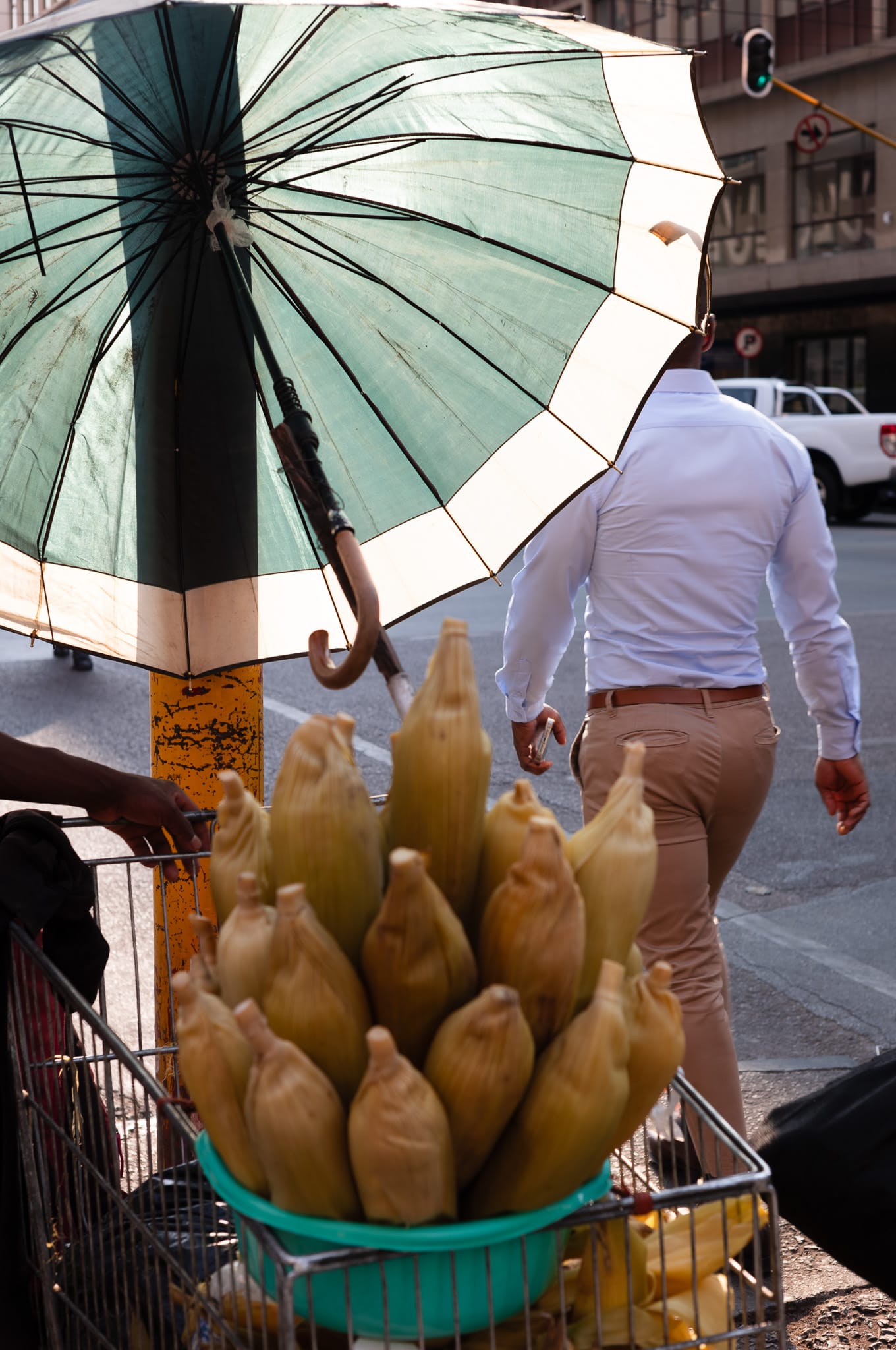
Street scenes with former Access Chapter 2 staff in downtown Pretoria, South Africa. Photos by Ben Eveslage on 11 September 2025.
As Keneilwe told me, “We can’t only stand on funders; we have to stand on our own, too.” But “standing on your own” is a heavier demand when you are carrying entire communities, including people who still text former staff for help, still treating AC2 as a lifeline long after the grant that paid for their services has ended.
When I ask Vuyo what comes next, she doesn’t hesitate. “We’re applying for new grants,” she says. “We want to scale the We Belong centers. Offer health, legal, empowerment, and shelter services. But for now, we just have to keep the lights on.” She glances toward the blackened storage room. “You take the fire as a sign,” she adds. “Maybe it means we start again.”
Standing with the team in Pretoria, it became clear that the deepest strain extended beyond funding disruptions to the unspoken requirement to rebuild again and again. Each cycle demands the same things: to mobilize trust, hold people together, and carry the emotional weight of work that may vanish again within months. What I witnessed was not failure, but exhaustion. Community organizations are asked to be resilient without being resourced, innovative without being secure, and accountable without being protected. The cost is paid by the people the HIV response relies on most, including peer educators, outreach workers, mentors, and advocates whose lives are often as precarious as those they support.
The fire they endure is not one they started. It is the product of a system that rewards visibility over stability and short-term outputs over long-term continuity. If this moment in global development reveals anything, it is that sustaining progress requires more than emergency funding and quick fixes. It requires investment in people and in organizations trusted not only to deliver services, but to plan, grow, and care for those doing the work. Without that shift, the cycle will continue, and the fires will keep returning.
Postscript
When I reconnected with Vuyo in December 2025, she shared that she was no longer working at Access Chapter 2. Her departure, she explained, was shaped by the same forces running through this story: unstable funding, short-term contracts, and the emotional toll of holding responsibility without security.
Our conversation shifted quickly from her own situation to what she sees as the deeper issue. For Vuyo, the most urgent call to action is representation. Too often, she said, programs designed for transgender and queer communities are managed without trans voices at the center. Lived experience is treated as optional, while credentials and corporate structures take priority.
She spoke about the lack of empathy that emerges when leadership is disconnected from the realities of daily life for trans people in South Africa, from navigating public transport to surviving harassment, poverty, and exclusion. Skills like proposal writing, she reminded me, can be taught. Lived experience cannot.
Vuyo remains clear-eyed. Her advocacy now centers on ensuring that trans people are not only beneficiaries of programs, but leaders within them, shaping decisions, budgets, and priorities. It is a vision that echoes the larger lesson of this project: that the sustainability of HIV responses depends not only on funding, but on who is trusted to lead, and whose lives are valued in the process.
Featured local organization
Access Chapter 2 (AC2)
AC2 advances justice, dignity and inclusion for LGBTQIA+, women, and girls in South Africa. They offer safe legal, health and psychosocial services, advocate policy reform, and work via evidence-based research to dismantle systemic barriers.
#depth series
Through candid interviews and photos, Depth explores how community groups innovate, adapt, and survive amid funding cuts and uncertainty. Explore the series →

Member discussion